
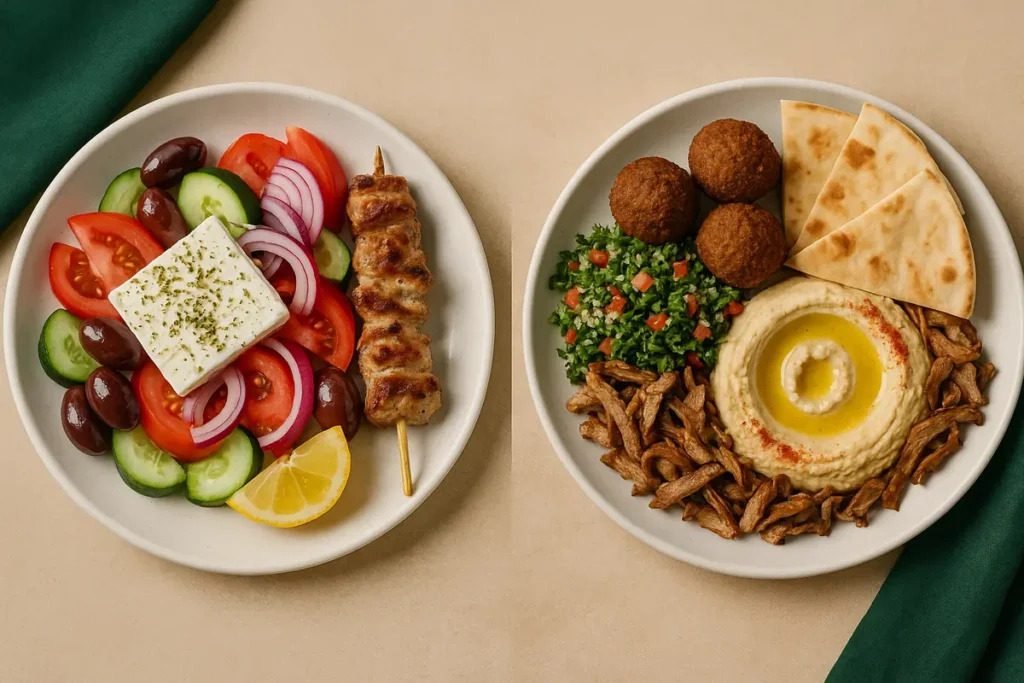
Many people use the terms “Greek food” and “Mediterranean food” interchangeably. While they share many similarities, they are not exactly the same.
Greek cuisine is one part of the broader Mediterranean culinary tradition. In other words, all Greek food can be considered Mediterranean, but not all Mediterranean food is Greek.
Understanding the difference can help you appreciate the diversity of flavours, ingredients, and dining experiences found throughout the Mediterranean region.
What Is Mediterranean Cuisine?

Mediterranean cuisine refers to the diverse food traditions found across countries surrounding the Mediterranean Sea. This includes regions in Southern Europe, the Middle East, and North Africa.
Countries commonly associated with Mediterranean cuisine include:
- Italy
- Greece
- Spain
- Turkey
- Lebanon
- Morocco
- Egypt
- France
- Croatia
Despite their differences, these cuisines share several common characteristics:
- Fresh vegetables and herbs
- Olive oil as a primary fat
- Seafood and lean proteins
- Legumes and grains
- Seasonal ingredients
- A focus on sharing and communal dining
Mediterranean cuisine is less about a specific menu and more about a philosophy of eating fresh, simple, and flavourful food.
What Is Greek Cuisine?
Greek cuisine is the traditional food of Greece and is one of the most recognised styles within Mediterranean cooking.
Greek food is known for its bright, fresh flavours and reliance on ingredients such as:
- Feta cheese
- Olive oil
- Oregano
- Dill
- Mint
- Lemon
- Yogurt
- Lamb
- Seafood
Many Greek dishes have become internationally popular because of their simplicity and bold flavour combinations.
Classic Greek dishes include:
- Greek salad
- Souvlaki
- Gyros
- Moussaka
- Spanakopita
- Tzatziki
Greek cuisine maintains a strong connection to family dining traditions and recipes passed down through generations.
Mediterranean vs Greek Cuisine: Key Differences
1. Geographic Scope
The biggest difference is geography.
Greek cuisine comes exclusively from Greece.
Mediterranean cuisine includes culinary traditions from more than 20 countries across Europe, Asia, and Africa.
Because Mediterranean cuisine covers such a large area, it naturally includes a wider variety of ingredients, flavours, and cooking styles.
2. Flavour Profiles
Greek cuisine tends to focus on fresh, bright flavours.
Common flavour combinations include:
- Lemon and olive oil
- Feta and herbs
- Garlic and yogurt
- Oregano and grilled meats
Mediterranean cuisine as a whole offers much broader flavour profiles depending on the region.
Examples include:
- Italian tomato-based sauces
- Spanish saffron dishes
- Moroccan spice blends
- Lebanese tahini and sumac
- Turkish grilled meats
3. Cheese Selection
Greek cuisine is heavily associated with feta cheese.
Mediterranean cuisine incorporates a much wider variety of cheeses, including:
- Mozzarella
- Burrata
- Halloumi
- Manchego
- Pecorino
- Labneh
4. Cooking Techniques
Greek cooking commonly features:
- Grilling
- Roasting
- Baking
Mediterranean cuisine incorporates additional techniques such as:
- Slow braising
- Stewing
- Wood-fire cooking
- Charcoal grilling
- Tagine cooking
5. Signature Dishes
Greek Cuisine:
- Gyros
- Souvlaki
- Moussaka
- Spanakopita
- Greek salad
Mediterranean Cuisine:
- Handmade pasta
- Paella
- Burrata dishes
- Hummus
- Falafel
- Seafood platters
- Mezze
Similarities Between Greek and Mediterranean Cuisine
Despite their differences, Greek and Mediterranean cuisines share many core principles.
Fresh Ingredients
Both prioritise seasonal vegetables, fresh herbs, seafood, and quality olive oil.
Simple Preparation
Rather than masking flavours with heavy sauces, both cuisines allow ingredients to take centre stage.
Social Dining
Meals are often designed to be shared, encouraging connection and conversation around the table.
Health-Conscious Approach
Both styles of cuisine are commonly associated with balanced eating patterns due to their focus on vegetables, lean proteins, healthy fats, and minimally processed ingredients.
Greek Salad vs Mediterranean Salad
One of the easiest ways to understand the difference is through salads.
Greek Salad
A traditional Greek salad typically contains:
- Tomatoes
- Cucumber
- Red onion
- Olives
- Feta cheese
- Olive oil
- Oregano
It is simple, chunky, and focused on a few high-quality ingredients.
Mediterranean Salad
Mediterranean salads vary significantly depending on the region.
They may include:
- Lettuce
- Chickpeas
- Couscous
- Bulgur wheat
- Herbs
- Citrus dressings
- Tahini
- Grilled seafood
Mediterranean salads tend to be more diverse and adaptable.
Which Cuisine Is Better?
The answer depends on your personal preferences.
If you enjoy bold lemon flavours, feta cheese, and traditional family-style recipes, Greek cuisine may be your favourite.
If you prefer exploring a wider range of flavours from Italy, Spain, the Middle East, and North Africa, Mediterranean cuisine offers greater variety.
Neither is better than the other. Instead, Greek cuisine represents one of the many delicious branches of the larger Mediterranean culinary tradition.
Experience Mediterranean Dining in Canggu
If you’re looking to explore Mediterranean flavours beyond traditional Greek cuisine, Jade by Todd English offers a contemporary interpretation of Mediterranean dining in Canggu.
Inspired by the diverse culinary traditions of the Mediterranean region, Jade combines fresh seafood, premium ingredients, handcrafted dishes, and a refined dining atmosphere. The menu reflects the shared philosophy found throughout Mediterranean cuisine — quality ingredients, vibrant flavours, and dishes designed to be enjoyed together. Jade offers an experience that celebrates the best of the region’s culinary. heritage.
FAQ: Mediterranean vs Greek Cuisine
Is Greek food considered Mediterranean food?
Yes. Greek cuisine is a part of Mediterranean cuisine. However, Mediterranean cuisine includes many other countries and culinary traditions beyond Greece.
What is the main difference between Greek and Mediterranean food?
Greek cuisine comes specifically from Greece, while Mediterranean cuisine includes foods from multiple countries across Southern Europe, the Middle East, and North Africa.
Is Greek food healthier than Mediterranean food?
Both cuisines can be part of a healthy diet. They emphasise vegetables, olive oil, seafood, legumes, and fresh ingredients.
Does Mediterranean food always include Greek dishes?
Not necessarily. Mediterranean cuisine includes many regional styles such as Italian, Spanish, Lebanese, Turkish, and Moroccan cooking in addition to Greek food.
What are the most popular Greek dishes?
Some of the most popular Greek dishes include gyros, souvlaki, moussaka, spanakopita, tzatziki, and Greek salad.
What are common Mediterranean dishes?
Popular Mediterranean dishes include hummus, falafel, burrata, seafood platters, mezze, grilled vegetables, handmade pasta, and paella.